
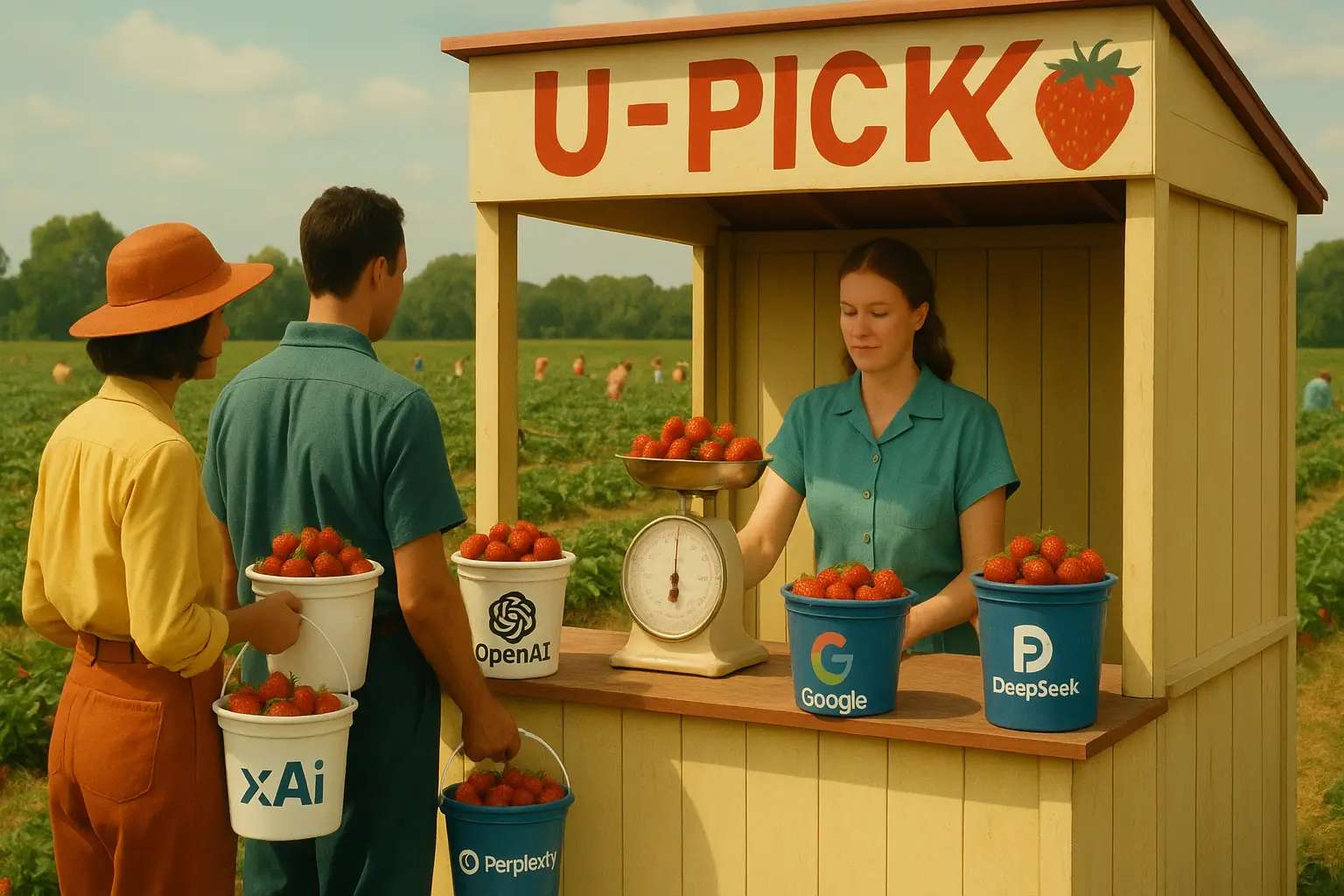
In late 2025, a significant development in how digital content is licensed and monetized on the internet reached a milestone: the publication of Really Simple Licensing (RSL) 1.0 as an official web standard with broad industry backing. At its core, RSL is a machine-readable, open licensing specification intended to give web publishers, creators, and platforms a clear, scalable way to articulate how their content may be used by artificial intelligence systems and automated crawlers. Complementing the specification itself is the RSL Collective, a newly formed nonprofit rights organization and licensing platform designed to pool the rights of participating publishers and strengthen their negotiation power with AI companies.
This development marks an inflection point in how the web economy could evolve in the era of AI, where large language models and generative systems increasingly depend on vast collections of online content.
Why RSL Matters Now
Until RSL, publishers had only limited tools for asserting how automated systems could use their content. The traditional robots.txt file, designed decades ago for search engine indexing, offers a simple allow/disallow mechanism. It provides no way to specify licensing terms, fees, payment structures, or nuanced permissions for different kinds of usage. As AI systems grew more sophisticated, this binary model proved inadequate for content owners seeking transparency, control, and compensation.
RSL addresses this gap by establishing an industry-level, machine-readable licensing protocol. It enables content owners to express specific usage terms using a standardized XML vocabulary, whether that is free use with attribution, commercial licensing, pay-per-use terms, or explicit restrictions on training or indexing by AI systems. With such capabilities, RSL aims to reshape the economics of the web so that creators are not just sources of data, but recognized participants in the digital value chain.
RSL 1.0: What the Specification Enables
Published as an industry specification in late 2025, the RSL 1.0 standard introduces several capabilities that go beyond mere blocking or permitting crawlers:
1. Machine-Readable Licensing.
The standard defines an XML-based language that AI systems and automated clients can parse automatically. An RSL document specifies which digital assets (web pages, images, datasets, books, etc.) are covered, and what usage rights and restrictions apply to each. The structure allows for clarity, extensibility, and interoperability across platforms.
2. Usage Categories Tailored for AI.
RSL defines nuanced usage categories such as ai-all, ai-input, and ai-index, giving content owners fine-grained control over whether their content can be included in AI training, indexation, or inference tasks. Crucially, publishers can allow traditional search indexing while opting out of AI-specific use cases. This separation acknowledges distinct business models and user expectations.
3. Licensing and Payment Terms.
Beyond permissions, RSL supports structured licensing terms that include payment requirements — from simple attribution to pay-per-use or subscription models. This transforms licensing from static declarations into a negotiable economic instrument. AI companies could, in principle, request and acquire licenses automatically, fostering more transparent commercial relationships.
4. Contribution Options for the Commons.
In collaboration with Creative Commons, RSL introduces a “contribution” licensing option intended to protect the non-commercial digital commons. It enables nonprofit creators and knowledge-sharing platforms to mandate monetary or in-kind contributions from AI systems that benefit from their content — without sacrificing open access.
5. Compatibility and Discovery.
The specification includes discovery mechanisms so that automated clients can locate RSL licenses associated with web assets, using robots.txt directives, HTTP headers, or embedded links. It also defines how licensing servers operate using an Open License Protocol (OLP), which extends OAuth mechanisms for issuing and validating licenses and tokens.
The RSL Collective: Collective Power for Publishers
Parallel to the specification itself is the RSL Collective, a nonprofit rights organization and licensing platform that leverages the RSL Standard. The Collective’s mission is to unify the licensing efforts of publishers and creators, enabling them to negotiate fair compensation from AI companies at scale, much like how collective rights organizations operate in the music industry (e.g., ASCAP or BMI).
The Collective allows publishers to:
- Aggregate rights and licensing terms from many individual sites and creators.
- Simplify negotiations with AI providers who need standardized, machine-readable licenses.
- Enable royalty streams on a pay-per-use basis, where AI systems compensate publishers based on actual usage of their content.
- Support secure licensing for proprietary or encrypted content, extending beyond public web pages to books, videos, and data sets.
The logic behind collective licensing is straightforward: by pooling the rights and scale of many participants, smaller publishers gain leverage they could not achieve alone. This is crucial in negotiations with the largest AI firms, which consume enormous volumes of data to build and fine-tune their models.
Industry Support and the Road Ahead
RSL’s launch has attracted significant backing. At least 1,500 media brands, publishers, technology companies, and infrastructure providers now endorse the standard, spanning tens of billions of web pages used in AI training. Supporters include major publishers, leading media outlets, and internet infrastructure firms such as Cloudflare and Fastly, which are exploring enforcement mechanisms for licensed access.
This broad coalition suggests RSL has momentum beyond theory. By establishing a shared language for licensing in an AI-driven ecosystem, it gives content owners a practical framework for asserting their rights, and AI developers a clear protocol for legal compliance. Yet widespread adoption and implementation will determine whether this becomes a new norm or remains an optional layer on the web.
Toward a Sustainable Content Economy
RSL 1.0 and the RSL Collective represent a collective response to a fundamental shift in the internet’s economic model. As AI systems grow more capable and more dependent on copyrighted and curated content, sustainable mechanisms for licensing, control, and compensation become essential. RSL offers a technical specification that is both expressive and interoperable, and a collective platform to amplify the bargaining power of content owners. If widely adopted, this could reshape how digital content is valued, licensed, and monetized in the AI era.