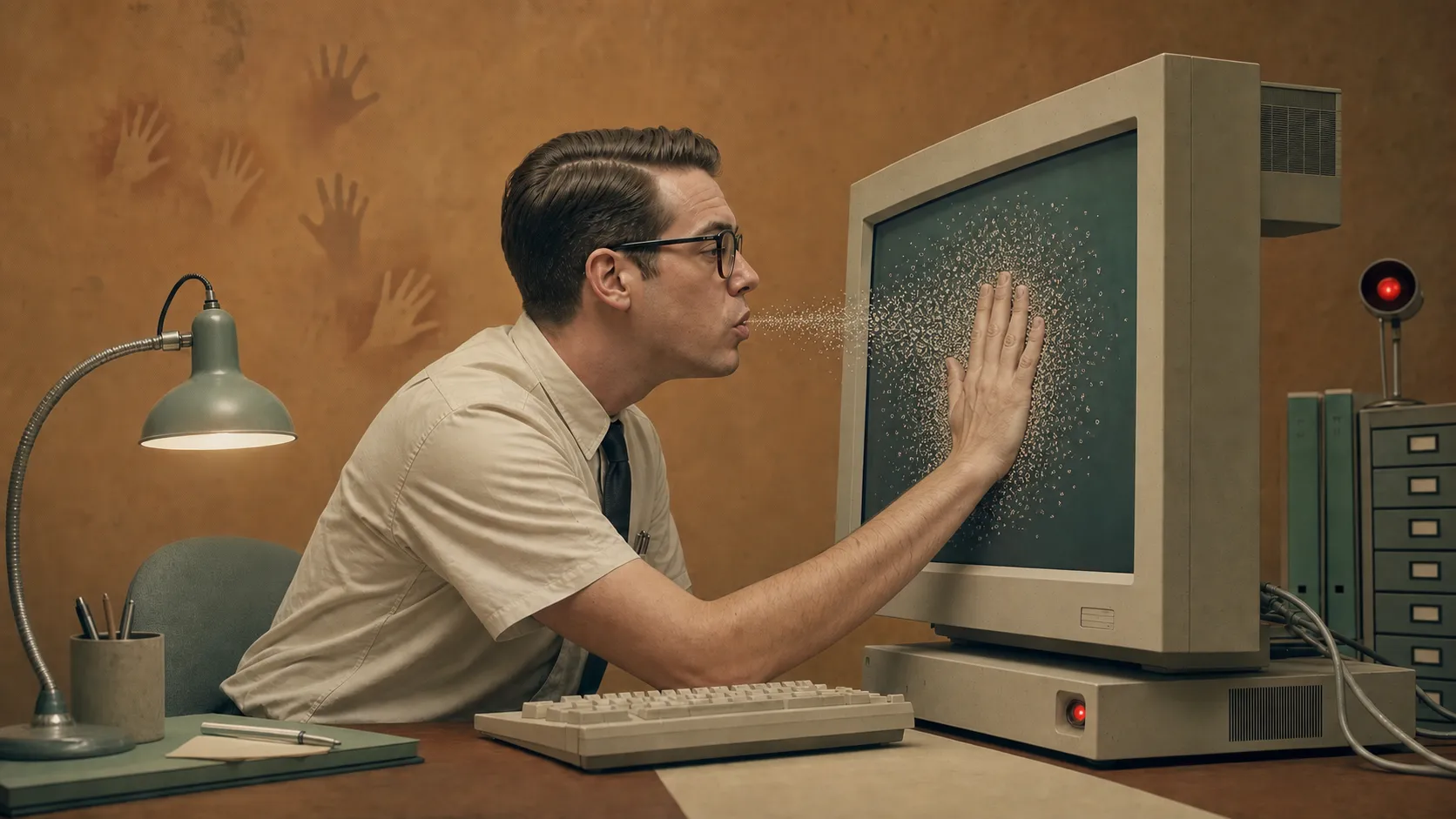
Linus Torvalds has never seemed like a man tormented by the possibility that strangers might find him insufficiently fashionable. This is useful to remember whenever fashion disguises itself as ethics. In July, amid a Linux kernel discussion about AI-assisted code review, Torvalds announced that Linux would not become an anti-AI project. Those unable to live with that could fork it—or leave. His central proposition was magnificently unromantic: “AI is a tool, just like other tools we use.” Its usefulness, he added, was no longer seriously in doubt.
This was not a papal bull declaring the chatbot infallible. Torvalds explicitly conceded that AI can be painful for maintainer workloads—even while it keeps finding embarrassing bugs. His test is operational: make LLMs help maintainers instead of merely causing them pain. Nobody is to be forced to use them; nobody gets to forbid others either. A bad patch is a bad patch whether it was written by a neural network, a sleep-deprived genius, or a committee with matching lanyards. “Natural intelligence,” Torvalds tartly observed, is not exactly famous for its spotless record either. The kernel cares whether code works.
Now stroll from the kernel mailing list into the pastel colosseum of Threads, X, and Instagram. There one encounters a curious inversion. Programmers are increasingly told to judge the work; artists are told to inspect the artist’s toolbox for ideological contraband. If the picture involved oil, turpentine, and an attractively ruined shirt, it may qualify as authentic. If it involved a prompt, iteration, compositing, and digital editing, the soul is presumed to have left the building.
The charge is often phrased as a defence of creativity, while being oddly hostile to people creating things. Consider the distinct visual worlds assembled by Vincenzo Marzocchi, Nagi, Talina, and Pasu. Marzocchi describes surreal windows in which melancholic figures, natural forms, and suspended atmospheres meet; even titles such as The Silence of the Night, Astrid and the Melancholy, and Abandoned Bicycles betray a continuing set of obsessions, not a random raid on a slot machine. Whatever one thinks of an individual image, these feeds display selection, recurrence, mood, and authorship—the very qualities by which we normally recognise a body of work.
Inge Schuster makes the point almost comically difficult to evade. Before she began AI-assisted image-making in December 2023, she had designed clothing and interiors, founded a children’s fashion company, and spent twelve years in photography, particularly architectural photography. She did not wake up without an eye and download one with an app. She brought decades of composition, light, space, and storytelling to a new instrument. Her gallery describes a layered practice involving photography, digital construction, animation, cinematic sequences, lighting, post-production, and AI. The technology is part of the process; memory, solitude, absence, and intimacy are the subject.
Look, for instance, at Schuster’s ongoing Facing the Room: solitary men occupy sparse interiors before mirrors that may return an altered image—or none at all. Chairs, frames, and doorways become witnesses to unresolved identity. One can dislike it, certainly. But to insist that no imagination is present because a generator participated is to mistake muscular effort for artistic intention. By that test, a stone-carver is more creative than a film director, and the forklift driver at the foundry deserves top billing for the bronze.
The prompt, moreover, is only the most visible part of the process, rather as pressing the shutter is the most visible part of photography. The work lies in deciding what to ask for, recognising the promising accident, rejecting a hundred glossy banalities, steering variations, editing defects, combining elements, choosing a sequence, naming the work, and knowing when to stop. A generator can produce abundance. It cannot spare its user from taste. Indeed, abundance makes taste more important: when anything can be produced, the scarce act is deciding what deserves to exist.
None of this erases the serious arguments. Training data, consent, copyright, labour, energy use, disclosure, and the flood of industrial-strength slop all deserve rules and scrutiny. Artists should be honest about their processes; platforms and model makers should be accountable for theirs. But these are arguments about provenance, compensation, conduct, and responsibility. They are not proof that every person who exchanges a brush for a prompt has exchanged imagination for fraud. We did not abolish photography because cameras could plagiarise compositions, or abolish word processors because they made bad novels easier to write.
Torvalds’s practical ethic travels surprisingly well from code to art: do not romanticise the tool, do not deny its usefulness, do not offload responsibility, and judge the result with informed eyes. The human contribution migrates, but it does not vanish. In code it may move from typing syntax to specifying, reviewing, testing, and integrating. In art it may move from laying pigment to directing, selecting, editing, and constructing a visual world.
The moral hall monitors of social media dislike this answer because it denies them the pleasure of sorting humanity into the Pure and the Prompted. Yet a paintbrush is not a halo, and a prompt is not a confession. Tools have always rearranged craft, status, and access. The interesting question is not whether the machine touched the work. It is whether a mind made consequential choices—and whether the result makes another mind pause.
If that standard is intolerable, the Torvalds option remains available: fork culture. The rest of us can keep looking.
No comments yet