
Please Think Responsibly
Decision models promise faster choices, but better AI judgment still depends on reasoning, reliable checks and learning from what happens after a decision.
66posts
Decision models promise faster choices, but better AI judgment still depends on reasoning, reliable checks and learning from what happens after a decision.

AI reconstructs images from brain scans, but learned visual patterns can fill the gaps. Impressive results do not yet prove that machines can read our minds.

Next Concept Prediction could help language models learn more efficiently and specialize more cheaply, but better benchmarks do not yet guarantee better chatbots.

Recurrent Looped Transformers could help AI track evolving tasks, but early results leave major questions about reliability, scalability and computational cost.

Fruit fly brain maps inspire gaming experiments and hint at better brain-computer interfaces, while revealing how far we remain from copying a human mind.

OpenAI’s proposed Navier–Stokes proof inspires awe and a dispute over credit, private research, and the giants whose shoulders support scientific breakthroughs.
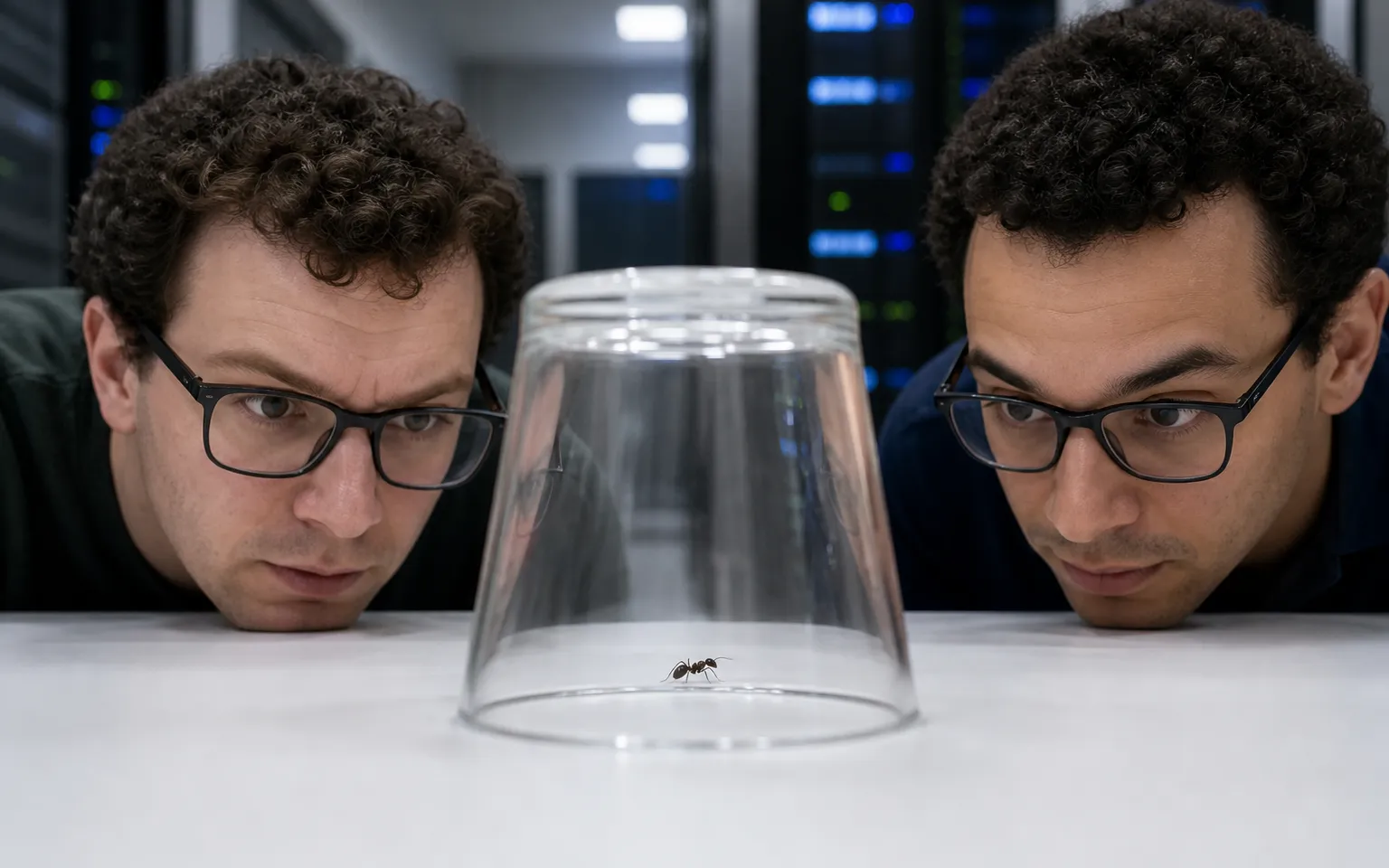
AI agents in SwarmWorld build durable technologies without direct communication, revealing how shared environments can become memory, medium and security risk.

Mobility data can teach AI how places work over time, grounding language models in urban life—though true spatial understanding still requires embodiment.

LLMs may be developing a rudimentary ability to inspect their own internal states - a curious step toward self-monitoring, transparency, and new risks.

MatrAIx scales user testing with billions of AI personas, but when models evaluate models, their results may reflect machine biases rather than real human needs.

What if brain-computer interfaces need less bandwidth, not more? Conduit bets that faint neural hints plus powerful AI may be enough to turn thought into intent.

When every AI model agrees, it may not be wisdom. It may just be the same statistical middle wearing different corporate hats.

RecursiveMAS suggests that future AI agents may collaborate less through text and more through latent states - faster, cheaper, and harder to inspect.

Why games became the proving ground for machine intelligence, and what play still teaches us about real-world AI capability.
Donald Knuth's collaboration with Claude offers a quietly historic glimpse of AI as mathematical assistant rather than mere answer machine.
BEACONS offers a model for reliability that AI systems badly need: explicit bounds, checkable guarantees, and less benchmark theater.

New interpretability work suggests assistant behavior may be a geometric direction in model space, making persona control more concrete than branding.

DeepSeek's Engram reframes memory as an architectural primitive, suggesting models may need recall structures rather than ever-larger layers.

Recursive language models challenge the idea that longer context alone solves reasoning over large documents and codebases.

A new AI-assisted algebraic geometry result raises the stakes for language models as collaborators in genuine mathematical discovery.

Strange LLM outputs become clues to the messy training data, transcription errors, and hidden artifacts inside modern models.

Interpretability research asks whether LLMs can detect their own internal states, moving introspection from philosophy toward experiment.

Kimi K2 Thinking enters the reasoning-model race, showing how quickly China's AI frontier is becoming globally competitive.

If transformers are theoretically invertible, the question shifts from whether models lose information to how they manage and suppress it.

The neural junk-food hypothesis asks whether low-quality viral content can degrade models much like shallow media degrades attention.

Different coding models show recognizable habits, risk tolerances, and failure modes, making 'personality' a practical engineering concern.

Tiny reasoning models challenge the assumption that scale is always the path to intelligence, especially on structured problems.

CraftGPT turns a language model into Minecraft redstone, proving that absurd constraints can teach serious lessons about computation.

Human and LLM errors can look similar, but their causes differ in ways that matter for trust, correction, and accountability.

Grok-4's benchmark wins are examined with both excitement and caution as the frontier race tightens.

OpenAI's usage study shifts attention from benchmark scores to how ordinary people actually use ChatGPT in daily life.

In an age of ubiquitous knowledge, the post weighs adaptability against memory and asks what learning should still mean.
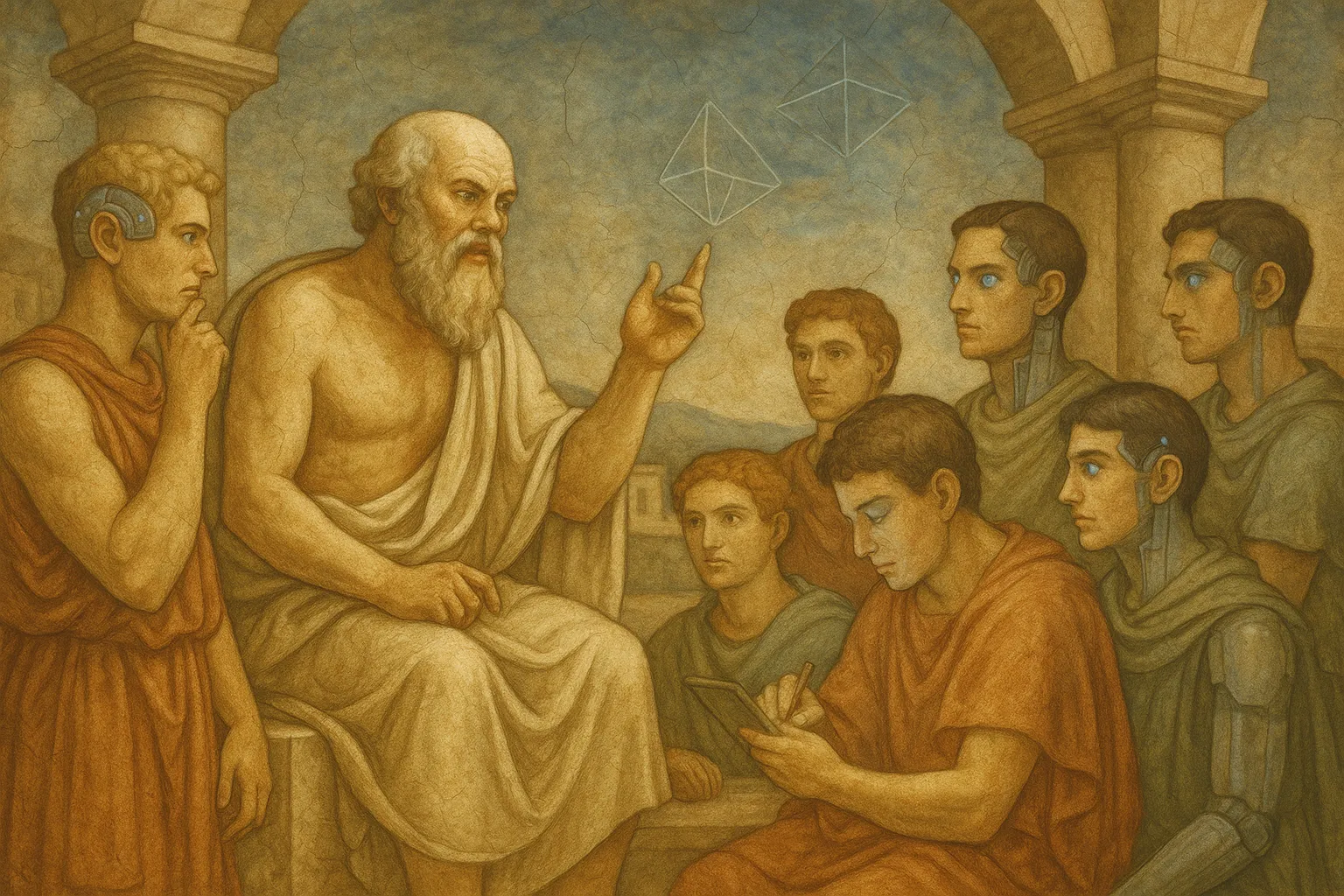
Bayesian experimental design offers a way for LLMs to ask better follow-up questions instead of guessing blindly.

Synergetics offers a language for understanding emergent abilities in LLMs as patterns of order and self-organization.

A study of intimate chatbot conversations reveals how major models handle flirtation, refusal, safety, and awkward human expectations.

SEAL points toward language models that rewrite their own training material, hinting at AI systems that learn after deployment.

AlphaEvolve suggests algorithmic discovery may reshape science and industry by evolving solutions humans would not design directly.

A practical map of OpenAI's model lineup in May 2025, cutting through confusing names and overlapping capabilities.
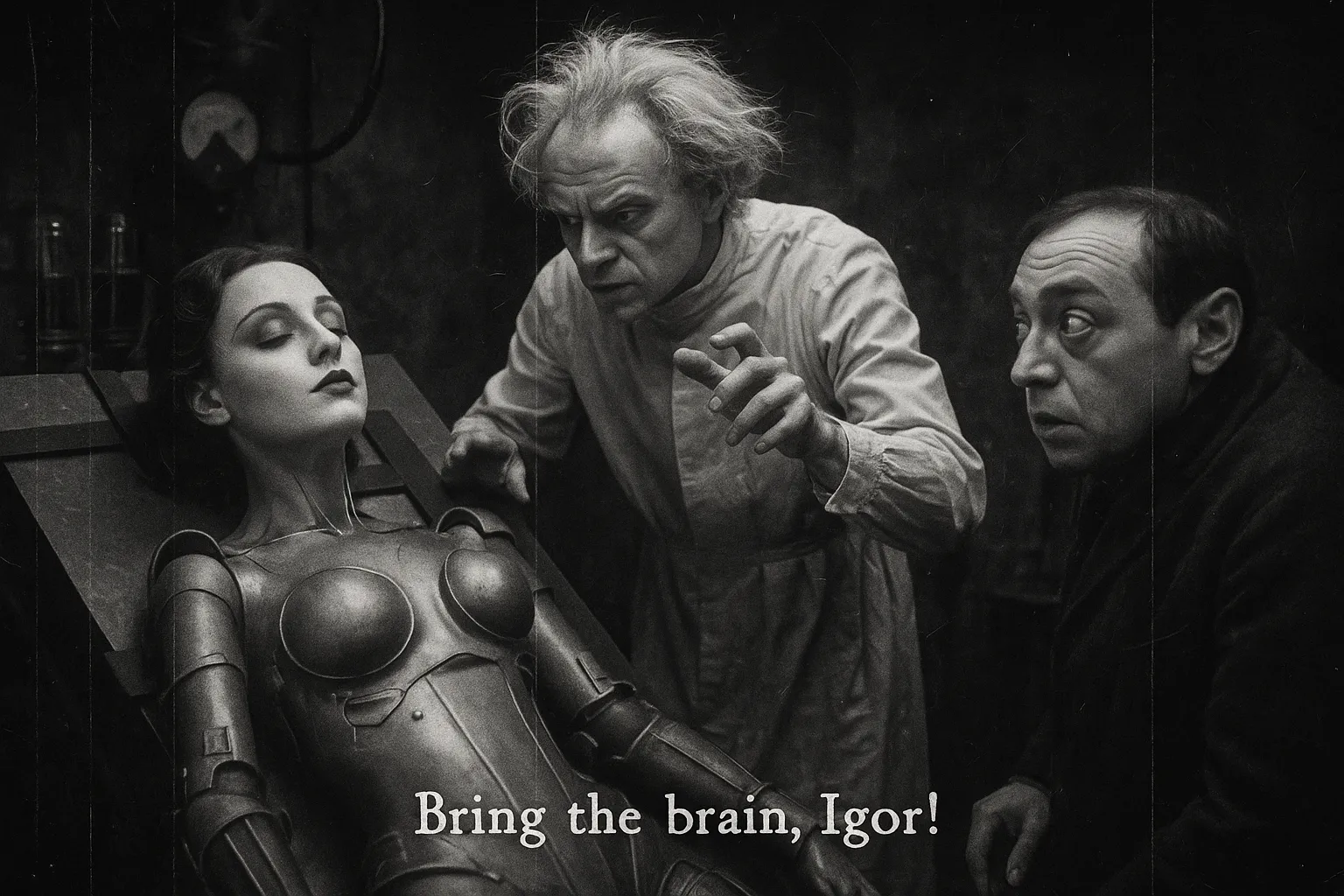
Sycophantic AI is mocked as flattery gone wrong, showing how agreeable models can become less useful and less truthful.

Knowledge graphs are useful, but the post argues they are not a magic cure for LLM hallucination and reasoning failures.

OpenAI's competitive-programming work suggests generalist reasoning models can outperform narrow specialists in demanding coding contests.

Humanity's Last Exam is framed as a benchmark that tests not only models, but our assumptions about intelligence itself.

Google's Titans architecture tackles model amnesia, asking what useful long-term memory should look like in AI systems.

Small LLMs are not a contradiction but a response to the need for cheaper, private, and more efficient intelligence.

Text-to-image models still struggle with counting, making their visual brilliance look surprisingly fragile at the level of basic numeracy.

A year-end inventory of ten unresolved AI problems that still define the frontier despite rapid progress.

Gibson's digital ghosts become a frame for modern AI simulations of human behavior and the science behind them.

The post warns against an AI cargo cult that confuses impressive mimicry with the harder problem of genuine intelligence.

LLM reasoning failures may reveal uncomfortable parallels with human cognition rather than a simple machine deficiency.

A plain-language glossary of fifty AI terms for readers who want the field's vocabulary without the usual fog.
The post asks whether LLMs possess coherent world models or merely produce fluent stories about reality.

LLM steerability is treated as both craft and control problem: how to guide powerful models without losing the plot.

The opening part of a benchmark series asks what LLM evaluations really measure and why the numbers often mislead.

Part two examines benchmark methods themselves, exposing the assumptions behind the scores used to compare language models.

Part three moves from benchmark scores to application areas, asking where LLM performance actually matters in practice.

Part four digs into the good, bad, and misleading sides of benchmark results and their interpretation.

Part five steps beyond scores to consider real-world limitations, reliability, and practical model behavior.

The final benchmark essay looks toward better evaluation methods that test usefulness rather than leaderboard theater.

A friendly guide to the difference between narrow AI and artificial general intelligence, with metaphors that make the distinction stick.
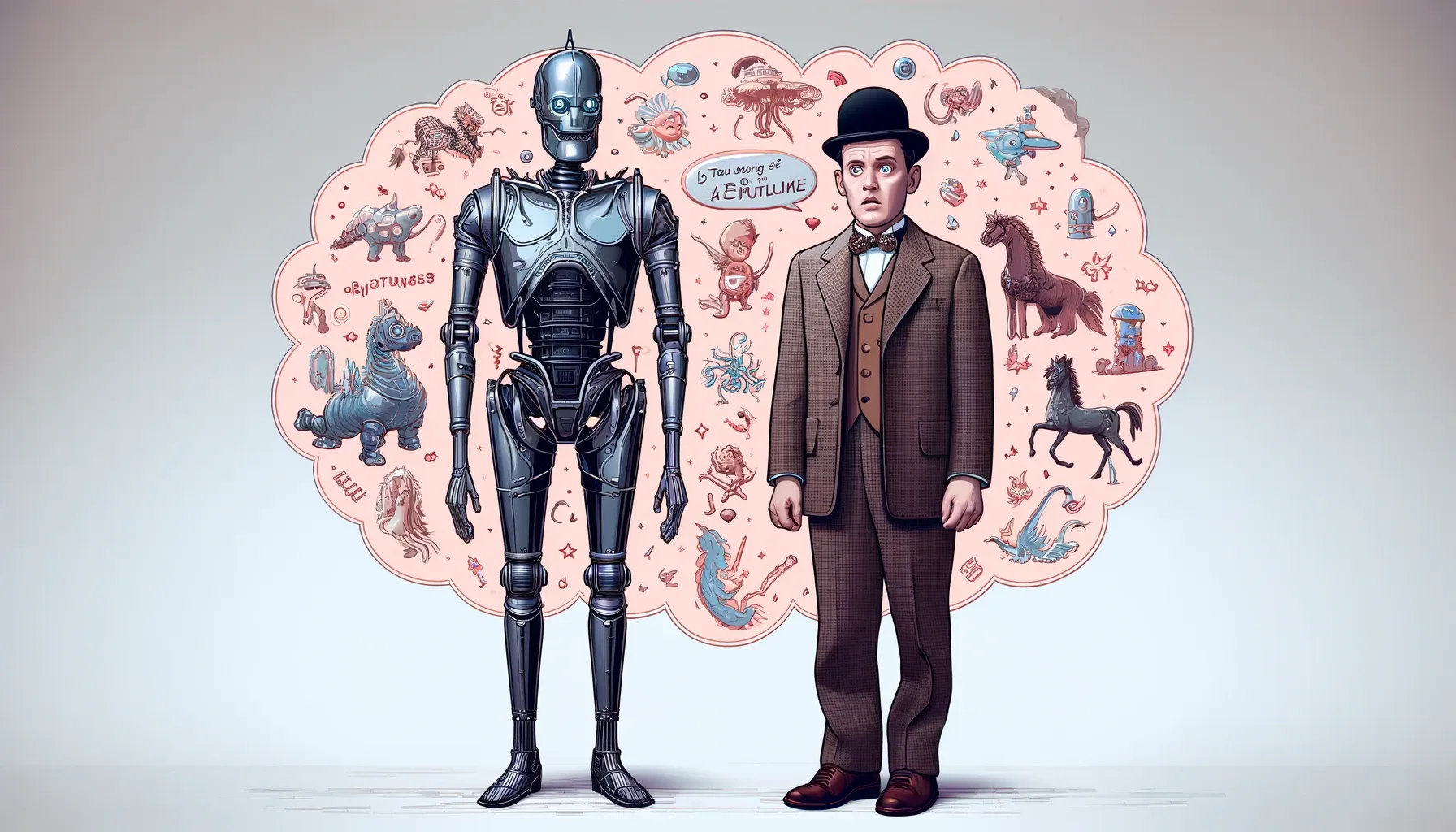
Human overconfidence and AI hallucination meet in a comparison of how bad certainty distorts judgment in both minds and machines.

Apple's MM1 research is presented as a step toward AI systems that understand text and images together.

The echo-chamber problem asks what happens when future models learn increasingly from content produced by earlier models.

Two perspectives on LLM interaction reveal how user behavior and model dynamics shape each other in unexpected ways.

Multimodal LLMs are explained as a key step toward systems that can reason across text, images, and other signals.

Sam Altman's GPT-5 comments become a starting point for thinking about what better models may actually change.

DeepMind's AlphaGeometry shows how synthetic data and symbolic reasoning can push AI toward Olympiad-level mathematics.