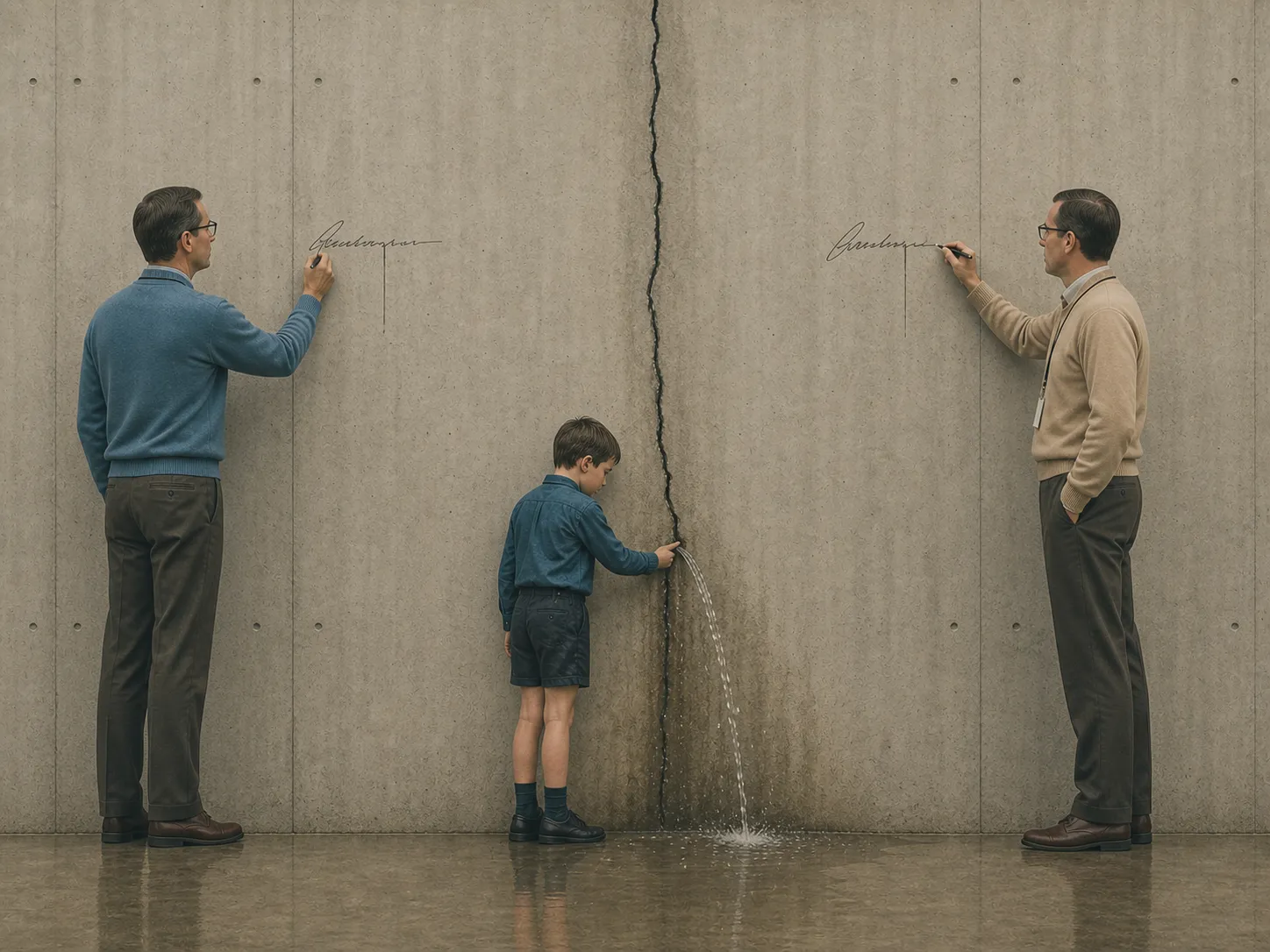
There is something irresistibly modern about 1,324 employees of frontier AI companies assembling beneath the banner of caution and asking the government to prepare a brake. The “Pacing the Frontier” statement does not demand an immediate halt. It asks the United States to support an international effort to develop the tools that might someday allow humanity to slow automated AI research. This distinction matters. It also explains why the document is so easy to sign.
The statement is sober, polished and almost frictionless. Artificial intelligence may accelerate beyond our ability to control it. Competitive pressure makes unilateral restraint difficult. Governments should therefore create mechanisms for coordinated pacing. Who could object? The language contains enough alarm to demonstrate moral seriousness, yet too little specificity to impose an identifiable sacrifice on anyone endorsing it.
There is no definition of “pacing.” No trigger. No proposed authority. No account of what happens when China declines the invitation, an open-source project crosses the threshold, or an obscure laboratory trains the prohibited model in a jurisdiction that finds Western anxiety commercially convenient. There is no answer to the oldest political question: who decides? Nor to the second oldest: who makes them obey?
That may be understandable in a short statement. But it is also the statement’s central luxury. Its signatories ask society to begin designing a machine whose purpose, controls and emergency conditions remain unspecified. The statement commits none of them to slowing their own work. Instead, it requests a future coordination mechanism under which everybody might slow together, provided the danger becomes sufficiently grave and the competitive disadvantage has first been legislated away.
It is restraint with an escape clause.
Many of the signatories work for the very companies accumulating compute, recruiting researchers and releasing ever more capable systems. Their signatures are explicitly personal and do not represent their employers. Thus the moral position is individualized while the commercial activity remains institutional. One may continue building the engine at work and petition for a brake after hours. The signature becomes a kind of moral carbon offset for the GPU cluster.
This does not make the underlying concern fraudulent. Automated AI research could produce genuinely dangerous feedback loops. Cybersecurity, model autonomy and the concentration of immense capability deserve more than cheerful accelerationist slogans. But sincerity does not rescue vagueness. Indeed, sincere people can be especially useful to institutions: their anxiety becomes the noble language in which an incumbent advantage is defended.
Large frontier laboratories can absorb licensing regimes, compliance departments, mandatory evaluations and years of negotiation. Smaller competitors cannot. A sufficiently elaborate international “pacing” architecture might reduce catastrophic risk. It might also freeze today’s hierarchy in place, transforming the companies that reached the frontier first into its permanent, government-certified custodians. Regulation can be a brake. It can also be a moat wearing a seat belt.
And then there is a conspicuous absence from the published list: SpaceXAI. As of 2 August 2026, not one of the 1,324 listed signatories is identified with xAI, SpaceX or SpaceXAI—not even among those signing anonymously by name while retaining their corporate affiliation. Absence proves no doctrine. But institutions sometimes reveal themselves through the rituals they decline to join.
After SpaceX acquired xAI in February 2026, the combined enterprise became the most visible counterexample to this particular moral idiom. SpaceXAI says it built Colossus—a 200,000-GPU supercomputer—in 122 days. It describes its culture in the familiar language of first principles, extreme ambition and speed. Corporate slogans prove nothing. Hardware at that scale is not a slogan.
One need not regard Elon Musk as infallible—or even consistently prudent—to appreciate the contrast. While much of the AI establishment petitions Washington to begin an international conversation about acquiring the future ability to consider slowing down, SpaceXAI is building compute, models, products, rockets and communications infrastructure. One side specializes increasingly in the language of responsible power. The other appears determined to find out what power can actually do.
That is not an argument for recklessness. It is an argument for concrete responsibility.
Judge SpaceXAI by its models, security, evaluations, energy use, failures and candour about those failures. Demand measurable safeguards. Establish liability for measurable harms. Protect critical infrastructure. Define capability thresholds that can be independently tested. Require disclosure when systems cross them. Build verification methods before invoking planetary governance. A brake with an identified mechanism is engineering. A brake described only as “technical and governance tools” is a mood.
SpaceXAI’s absence may reflect arrogance, internal culture or simple disagreement with the statement. It does not prove that its employees are indifferent to safety. Nor does signing prove that employees elsewhere possess greater courage or wisdom. What the absence does suggest is an unwillingness, so far, to participate in one of Silicon Valley’s most familiar rituals: publicly confessing the dangerous importance of one’s own work while continuing to scale it as fast as capital and electricity permit.
There are risks in moving quickly. There are also risks in teaching the most capable civilization in history to regard hesitation as its highest virtue. Slower AI means slower progress in medicine, materials science, energy, education and space exploration. It may mean surrendering strategic advantage to actors who will gladly inherit both the capability and the future while Western institutions perfect their consultation process. A responsible laboratory slowing alone does not make the technology disappear. It merely changes who develops it first.
A signature may cost something. It costs considerably less than the restraint being requested. It creates no new knowledge, trains no safer model and binds the signer to no particular act. It offers the emotional reward of courage without the inconvenience of a foregone product cycle. Building something difficult is less ceremonially virtuous. It involves mistakes, ridicule, deadlines, hardware and consequences.
The people behind “Pacing the Frontier” may be right that humanity will someday need a brake. If so, let them build one, specify when it engages and explain who controls it. Until then, there is something bracing about the absence of any publicly listed SpaceXAI signatory.
The frontier will not be secured by those most fluent in concern. It will be secured by those willing to turn concern into machinery—and who still have the nerve to keep the engine running.



No comments yet