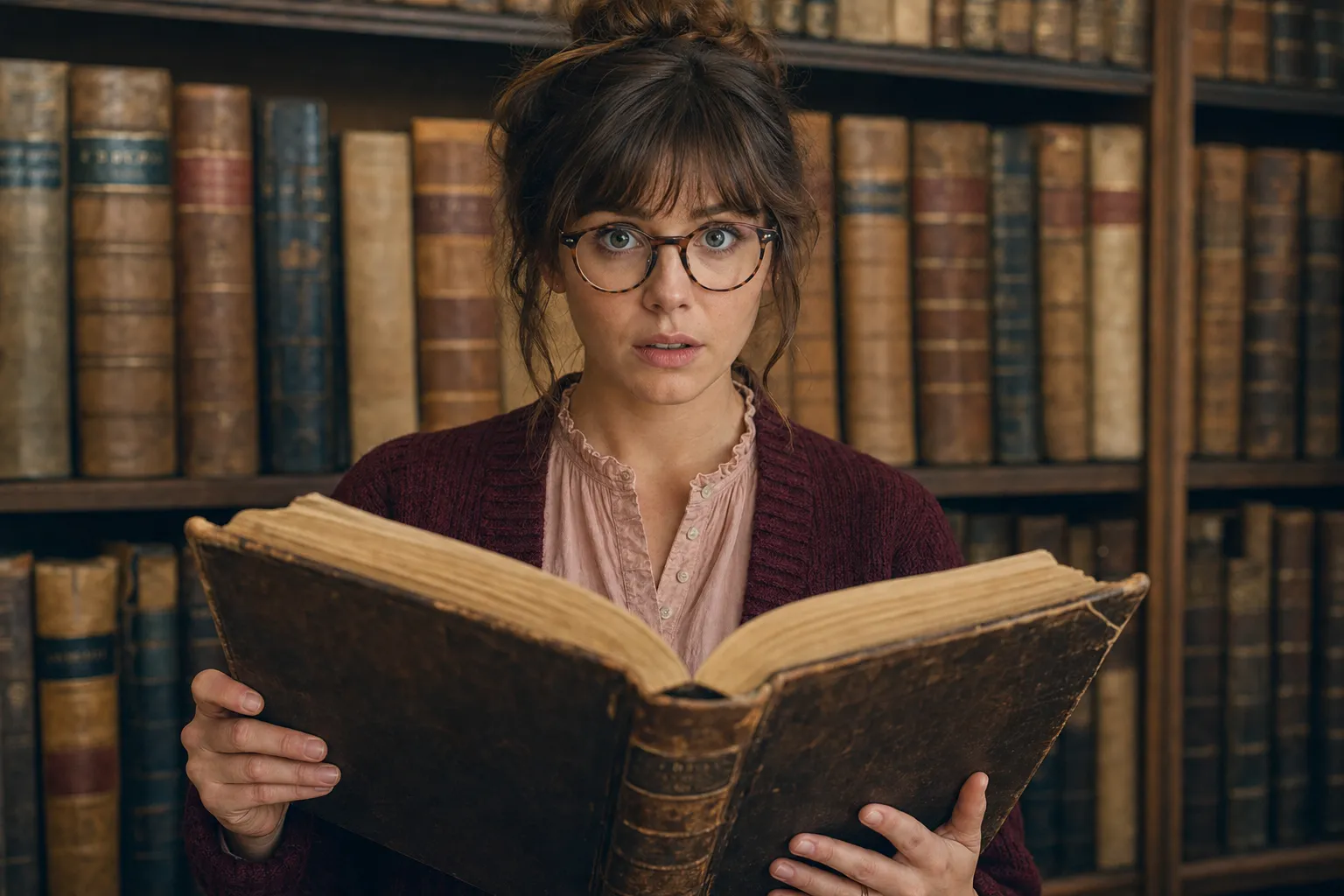
A recent post on X described a peculiar achievement of artificial intelligence: in order to teach machines everything humanity has written, companies are buying physical books, cutting off their spines, scanning the pages, and discarding what remains. Elon Musk replied that his team had been told to preserve rare books and scan them “the hard way.” This is reassuring, although also revealing. We have reached a point at which not destroying the library counts as the labour-intensive option.
The controversy appears to be about books, but it is really about a more troublesome object: the original.
Years ago, I encountered the problem in a less dramatic setting at Germany’s Federal Administrative Court in Leipzig. Judicial decisions had to be scanned. The obvious prize was the Rubrum: the formal heading identifying the court, the parties, the judges, and the procedural setting. Machines like rubrics. Rubrics sit where they are told, wear typographical uniforms, and behave as official information should.
The margins were another matter.
There, judges had left handwritten comments: corrections, doubts, arrows, irritated question marks, perhaps the occasional small rebellion against the majestic certainty of the printed page. To the automated scanner, these marks were defects. They wandered outside the layout, changed direction without warning, crossed printed lines, and declined to use an approved font. A thoughtful judge and a dead insect can look surprisingly similar to image-cleaning software.
Yet those awkward marks were often the most interesting part. The judgment recorded what the institution had decided. The marginalia showed thought before it put on ceremonial robes. One was law as product; the other, law as event.
What, then, remains of a scan? Usually, more than pessimists admit and less than technicians promise. A good scan preserves words, sequence, typography, pagination, and a large measure of visual form. It can rescue a fragile text from fire, flood, theft, censorship, and the slow appetite of silverfish. It can place a document before millions of readers who would never enter the room where the original is kept. This is no small miracle.
But a scan is not the thing. It is a theory about which properties of the thing deserve to survive.
Every act of digitisation begins with an ontology disguised as a settings menu. Resolution, colour depth, cropping, contrast, optical character recognition: each choice answers, silently, “What is this object?” If it is merely a container for sentences, the scanner may straighten the page, whiten the background, erase stains, and convert handwriting into noise. If it is an artefact, those same stains may be evidence. A coffee ring can date a working session. A thumbprint can reveal use. A change in ink can separate one reader from another. The blank page may not be blank at all; under different light it may carry pressure marks from writing once performed on the sheet above it.
Originality, therefore, is not simply the mystical aura of old paper. Nor is it identical with textual uniqueness. Two copies of the same edition may contain the same printed words, but they have not lived the same life. One slept unopened in a private library. Another crossed borders in a suitcase, was censored, repaired, lent, stolen, dedicated, annotated, and returned. Their text is identical; their testimony is not.
This is why “we kept the information” can be both perfectly true and profoundly misleading. Information is not a single substance poured from paper into pixels. There is semantic information: what the sentences say. There is material information: paper, ink, binding, watermark. There is relational information: who owned, handled, amended, or hid the object. And there is accidental information, which often becomes important only after nobody thought to preserve it.
The smell of a book belongs to this last, unruly category. Is it always important? Of course not. No constitutional principle depends on the fragrance of a photocopier, and scholarship would become difficult if every PDF required a scratch-and-sniff attachment. Bibliophilia can become a charming form of furniture worship. Sometimes a book really is valuable chiefly because of what it says, and a searchable digital copy is the better instrument for reading it.
But smell can also be history in volatile form: smoke, mould, glue, damp stone, tobacco, disinfectant, a particular kind of storage. It may be sentiment, evidence, or warning. Its importance cannot be decided by the nose alone, still less by a procurement spreadsheet. The point is not that every sensory property must be preserved. The point is that we should hesitate before declaring in advance which properties the future will never need.
Destructive scanning makes this hesitation impossible. It converts an epistemic judgment — “we believe the text is what matters” — into an irreversible physical fact. The digital copy may be flawless according to today’s questions, while the shredded original contained answers to questions not yet invented. Preservation should enlarge the number of possible future readings. Destruction closes them.
There is a delicious absurdity in training artificial intelligence on books while eliminating the evidence of human intelligence around their edges. We save the judicial decision and lose the judge’s doubt. We preserve the poem and discard the reader’s exclamation. We capture the recipe but not the grandmother’s correction: “less sugar — he lies.”
Perhaps the deepest difference is this: a database wants one authoritative version, while culture survives through variations, accidents, and arguments. The original is not sacred because it is old, scarce, or pleasantly musty. It matters because it remains available to contradict our description of it.
A scan says, “This is what we saw.”
The original, quietly occupying space and gathering dust, replies: “Look again.”
No comments yet