The artificial intelligence revolution has reached a reassuringly familiar stage of corporate development: somebody from Finance would like a word. Yesterday, employees were encouraged to reinvent civilization with autonomous agents. Today, civilization must be reinvented using the approved subscription. The machine can apparently reason across vast domains of human knowledge, but whether you may expense it remains a question for a person named Martin.
This is the delicious predicament of companies selling intelligence while buying somebody else’s. Microsoft’s own announcement of its Anthropic partnership provides the ingredients: Claude distribution through Microsoft products, a commitment by Anthropic to purchase $30 billion of Azure compute, and a proposed Microsoft investment of up to $5 billion. Customer, supplier, distributor, investor: the relationship requires a diagram that could double as an escape room.
Meta, meanwhile, offers Muse Code, a coding agent built for its own Muse Spark models. The attraction is straightforward. Every company would prefer its engineers to improve the family business while getting their work done. Unfortunately, engineers have a troublesome habit of preferring whichever tool gets their work done. Corporate loyalty is a fine thing until it introduces three new bugs and confidently deletes the test suite.
The sensible response is to compare results. A cheaper model can become expensive if it needs more supervision; a costly model can justify itself by reliably finishing difficult work. Owning the tool creates options, but ownership alone cannot establish its usefulness. Nobody would congratulate a restaurant for manufacturing its own dishwasher if the plates came out wearing yesterday’s lasagne.
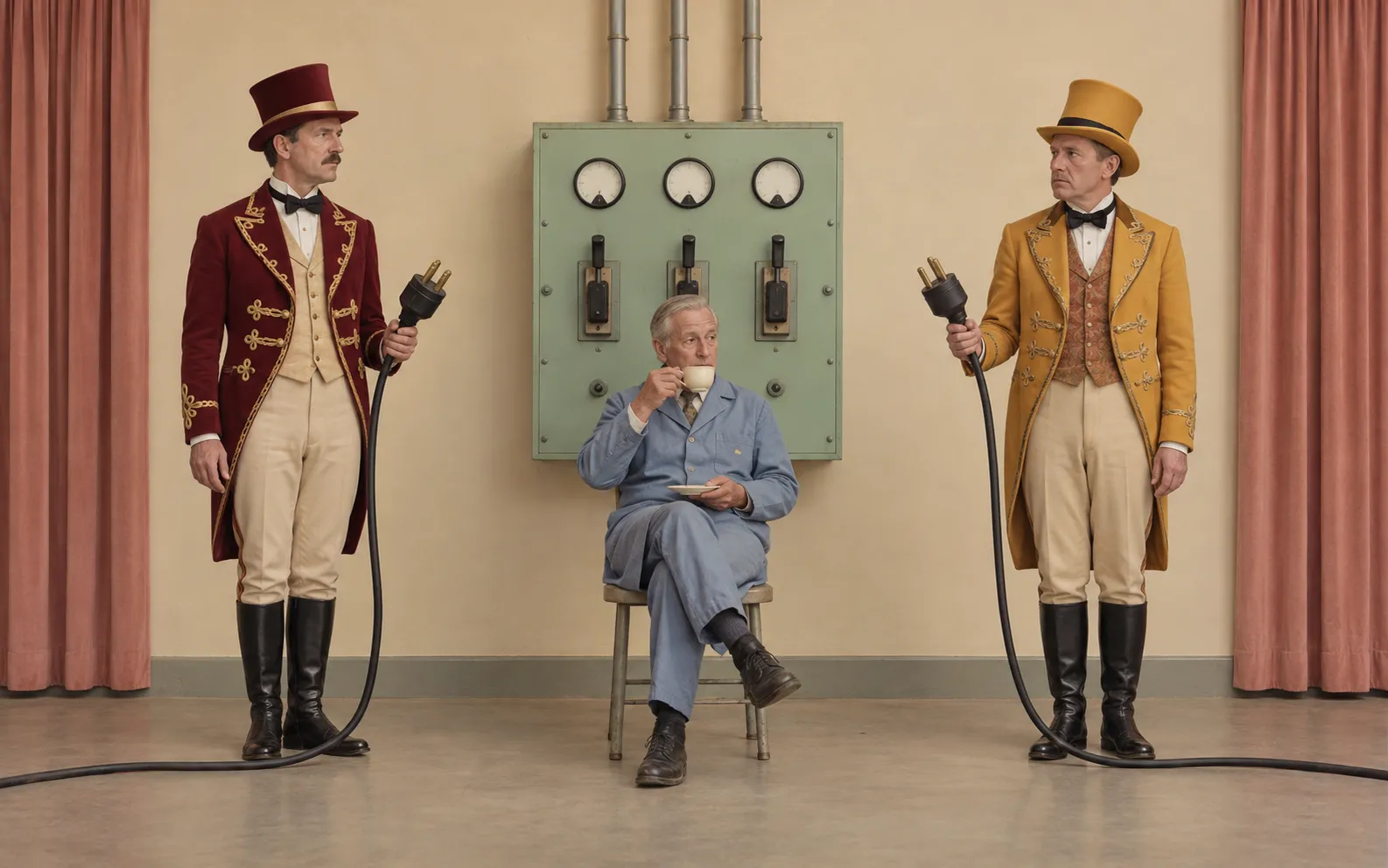
SpaceXAI adds a particularly entertaining twist. In May, Anthropic announced an agreement to use all the computing capacity at SpaceX’s Colossus 1: more than 300 megawatts and over 220,000 NVIDIA GPUs. SpaceXAI separately confirmed the arrangement. Here, the company behind a rival assistant also supplies the machinery that helps Claude serve its customers. The circus has a landlord, and the landlord has an act in the next ring.
That changes the economics of rivalry. A competitor gaining customers can also mean more business for your infrastructure. The strategic question expands from whose chatbot wins the conversation to who receives payment when the conversation happens. Brand partisans may find this emotionally unsatisfactory. Industrial equipment has never demonstrated much concern for the emotional needs of brand partisans.
There is real construction behind this position. SpaceXAI says it built the original Colossus system in 122 days and doubled it to 200,000 GPUs in another 92. Those are company-reported milestones describing installed computing infrastructure. They give the company something substantial to work with while everyone debates the future of consciousness. A transformer does not become operational because a keynote receives enthusiastic applause.
The next ambition reaches further upstream. SpaceX’s August Terafab announcement describes a planned Texas facility combining the manufacture, packaging and testing of advanced logic and memory devices. The initial phase is estimated to require $16.8 billion from SpaceX and Tesla. This is an attempt to gain more control over the physical supply chain beneath the models. It is also a remarkably elaborate response to discovering that your preferred supplier has a waiting list.
Memory deserves particular attention. AI processors need rapid access to enormous quantities of data; arithmetic hardware waiting for data is expensive furniture. Microsoft’s Maia 200 announcement makes that point concrete with 216 gigabytes of high-bandwidth memory and a design focused on moving data efficiently. The glamorous processor gets the portrait photograph. Memory makes sure the celebrity has something to say.
Still, the verbs matter. Building computing clusters, designing chips and manufacturing memory are separate achievements. Terafab’s published plans establish an intention to integrate production; they do not establish that SpaceXAI already operates a mature, self-sufficient memory-chip business. NVIDIA’s August announcement that SpaceXAI plans to expand with Vera Rubin hardware is a useful reminder that outside suppliers remain central. Even ambitious industrial independence comes with delivery notifications.
Microsoft and Meta also understand the hardware argument. Microsoft has deployed Maia 200, while Meta has described its MTIA 300 training chip and its production performance. Presenting either company as merely renting intelligence would miss substantial engineering work. The distinction is how far each business seeks to control its inputs, how effectively it deploys them, and which dependencies it accepts.
Nor does ownership abolish the bill. It changes its address. Purchased tokens become capital expenditure, electricity, cooling, maintenance and the challenge of keeping costly machines productively occupied. A fab adds manufacturing complexity. Spare capacity can generate revenue when customers want it; otherwise, it is an exceptionally expensive way of maintaining a comfortable indoor temperature.
SpaceXAI’s position is therefore more interesting than immunity from the industry’s absurdities. It can develop models, operate large computing systems, sell capacity to competitors and pursue deeper manufacturing integration. Each activity offers choices. None grants exemption from engineering, economics or the possibility that somebody else has built a better assistant this quarter.
The most amusing possibility is that the arguments upstairs will continue indefinitely while the contracts downstairs grow steadily more practical. Employees will debate which model writes better code. Executives will debate whose intelligence deserves strategic preference. Somewhere behind them, a machine will consume electricity, fetch data from memory and produce another invoice.
Martin from Finance may eventually understand the whole industry before anybody agrees whether the machines understand anything.



No comments yet