
The Bot at the Door
Meta’s AI support breach shows the new security risk: not fooled users, but automated systems socially engineered at scale.
24posts
Meta’s AI support breach shows the new security risk: not fooled users, but automated systems socially engineered at scale.

ChatGPT gets a Lockdown Mode: less magic, more brakes. A dry look at prompt injection, data leaks, and useful paranoia.

Morse code did not hack the AI. Boundary erosion did: translation became command, command became execution, and authority vanished.
A reported McKinsey AI security failure becomes a brutal parable about consulting confidence, exposed systems, and the revenge of basic engineering.
Claude Code Security shows how the perception of AI disruption can move cybersecurity markets before the real economics are clear.

A concise guide to model distillation as both useful compression technique and strategic attack surface in the LLM economy.
A viral agent-only social network turns into a security lesson about rapid AI prototyping, exposed data, and avoidable shortcuts.

Agent gateways feel risky because they connect communication, identity, and action, turning ordinary automation mistakes into cross-platform exposure.

OpenAI's confession-training work explores whether models can be taught to report their own failures before users pay the price.

Different coding models show recognizable habits, risk tolerances, and failure modes, making 'personality' a practical engineering concern.
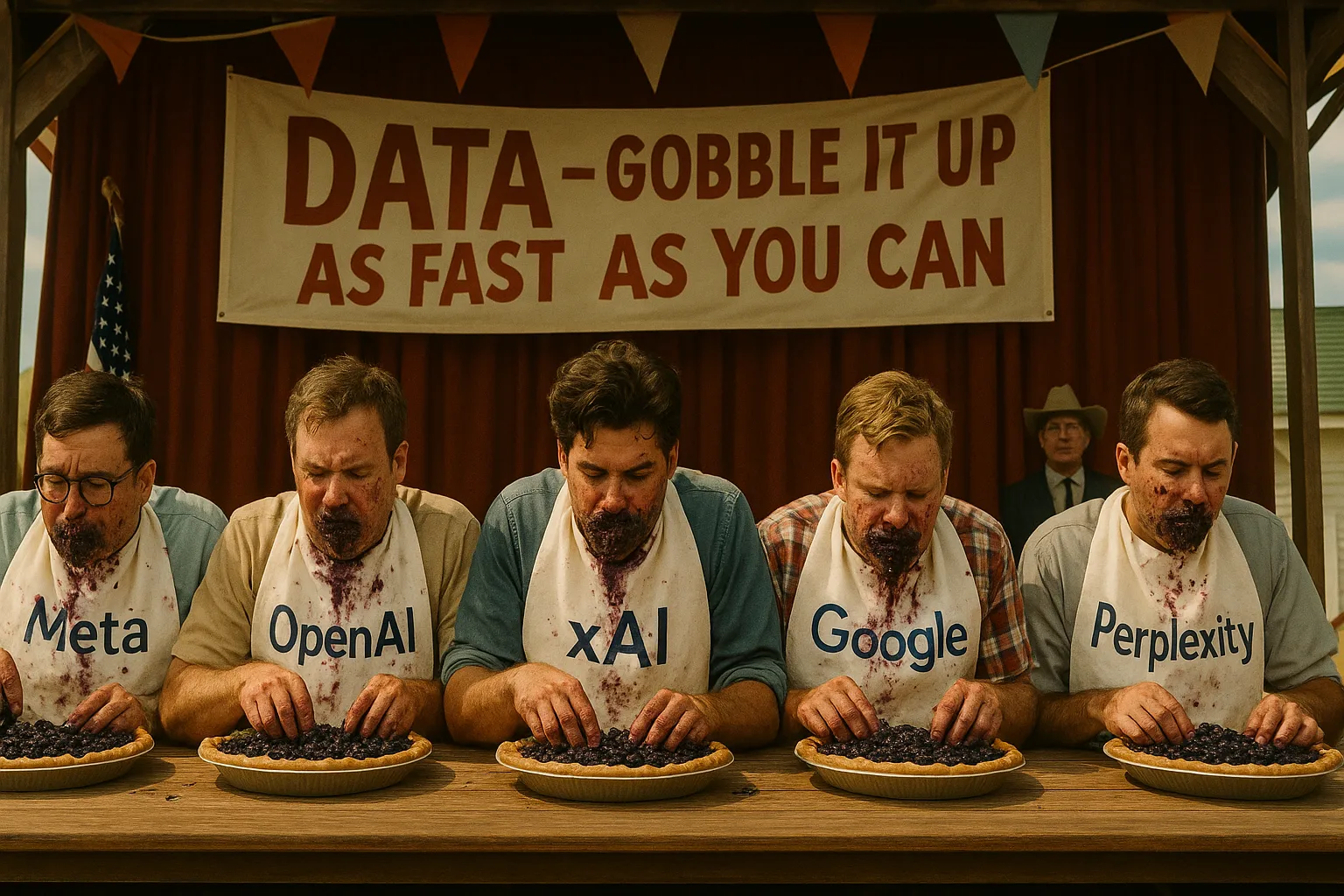
AI crawlers are overwhelming websites and exposing the mismatch between open-web ideals and industrial-scale data extraction.

System prompts are treated as hidden architecture, shaping model behavior while raising hard questions about transparency and control.

Dietrich Dörner's work on complex-system failure becomes a warning label for autonomous AI and overconfident decision-making.

An AI-discovered Linux zero-day turns vulnerability research into a philosophical question about expertise, automation, and trust.

Uncensored models promise creative freedom and research access, but also expose the tradeoffs that safety layers usually conceal.

Politeness toward AI may seem theatrical, but the post asks whether conversational norms still shape outcomes and users.

AI bots turn page views and ad metrics into a comedy of fraud, exposing the collapse of old web measurement.

Instead of exotic regulation, the post argues AI risk management should borrow from ordinary accountability for human employees.

Local LLMs are presented as the privacy-friendly alternative for users who want AI help without sending everything to the cloud.

Malla represents the darker side of generative AI, where language models become tools for scalable cybercrime.

Two specialized GPTs, InfoSec Advisor and Track&Field Analyst, show how custom assistants can serve focused expert domains.

A ChatGPT-based assistant trained on BSI IT-Grundschutz suggests how AI can support structured security guidance.

AI is used to explore risk, protection, and compliance questions in IT security through a structured expert-system lens.
InfoSec Advisor combines ChatGPT with German IT-Grundschutz knowledge to support security analysis and practical guidance.